
The 12 Days

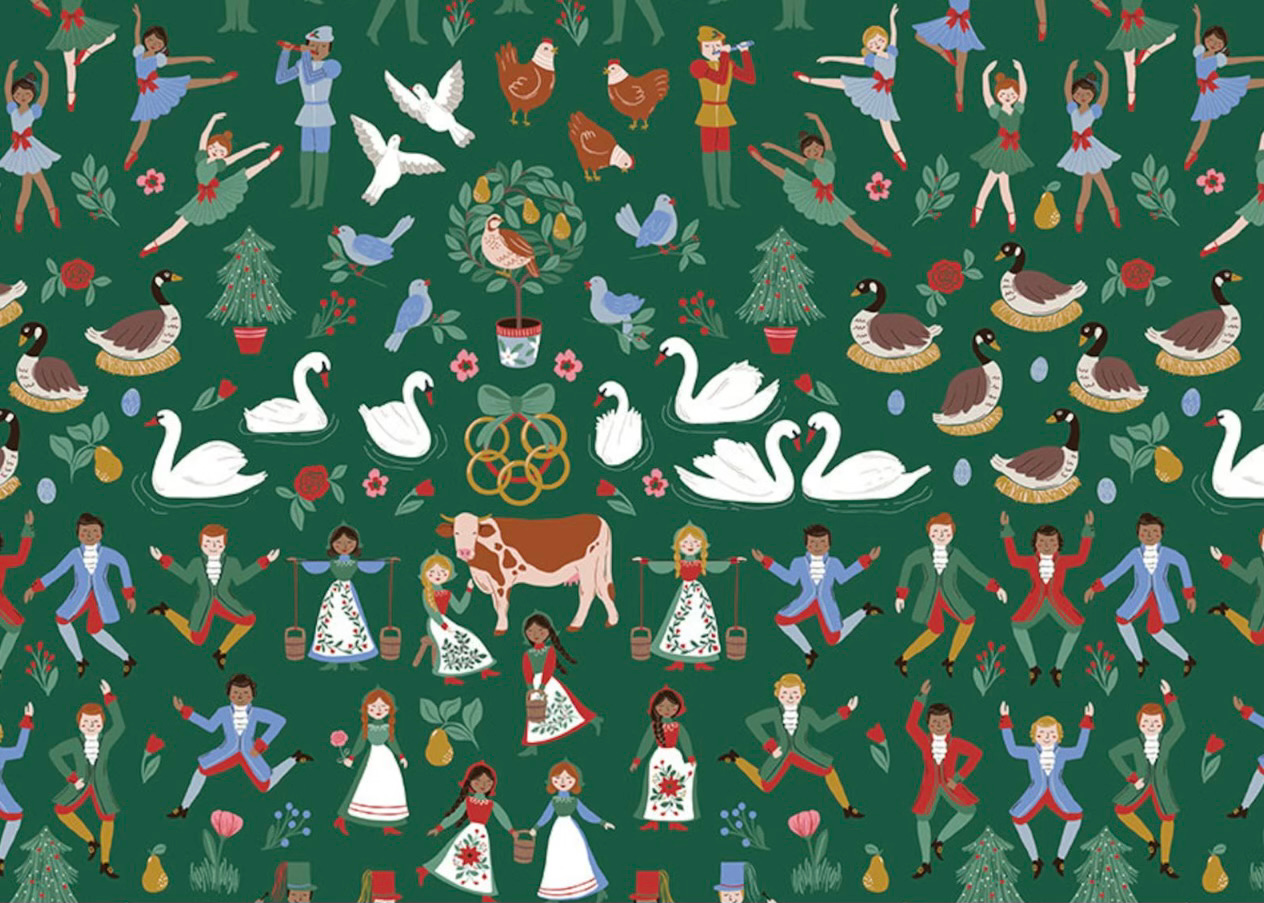
Every one of the twelve days between Christmas and Epiphany has traditionally been set apart for Christian selflessness and charity. Gift giving was not concentrated on a single day, but rather, as in the famous folk song, spread out through the entire season.
In that song, The Twelve Days of Christmas, each of the gifts represent some aspect of the blessing of Christ’s appearing. They portray the abundance of this present life, our calling to service, and the promise of heaven. Though theories vary on the origin of the song, it is likely an urban legend that it was intended to be a secret catechism song during the tumultuous days of Tudor England.
That rather fanciful interpretation attached very specific meanings to the symbols: the partridge in a pear tree, for instance, was assumed to be Christ, Himself, symbolically represented as a mournful mother hen—an expression of His lament: “Jerusalem! Jerusalem! How oft would I have sheltered thee under my wings, as a hen does her chicks.” The two turtledoves were said to represent the Old and New Testaments. The three French Hens symbolized faith, hope, and love. The four calling birds portrayed the four Gospels. The five gold rings were said to be the books of the “Pentateuch.” The six geese a-laying represented the six days of creation while the seven swans a-swimming were taken to be the seven gifts of the Holy Spirit. The eight maids a-milking were the eight beatitudes while the nine ladies dancing represented the Fruits of the Holy Spirit. The ten lords a-leaping were the Ten Commandments. The eleven pipers piping were the faithful eleven apostles, and the twelve drummers were the doctrines of the Creed.
These interpretations are likely exaggerated. For one thing, the first seven gifts all refer to birds. The fourth day’s “calling birds” are actually “colly birds.” “Colly” literally means “black as coal,” thus “colly birds” were blackbirds. The “golden rings” on the fifth day refer not to pieces of jewelry, but to ring-necked birds, such as pheasants—thus, altering the symbolism.
But, even though symbolic maximalism likely goes too far, it would be just as wrong to assume that the song is “strictly secular,” as many debunking websites declare. Secularism in sixteenth century England was about as credible then as an Elvis sighting is today. The answer to over-wrought allegoricalism is not the equal and opposite error of over-wrought reductionism. Symbols don’t have to mean everything to mean something.
Very likely, this delightful folk song was just intended to highlight our calling to mercy and compassion, in light of our great inheritance: Heaven’s own mercy and compassion—the good news, glad tidings, and great joy of Christmas. Sing, therefore, with new gusto and zeal. For, “every good and perfect gift comes from above.” Even partridges, pear trees, and leaping lords!
Merry Christmas.