
Sinners in God’s Hands

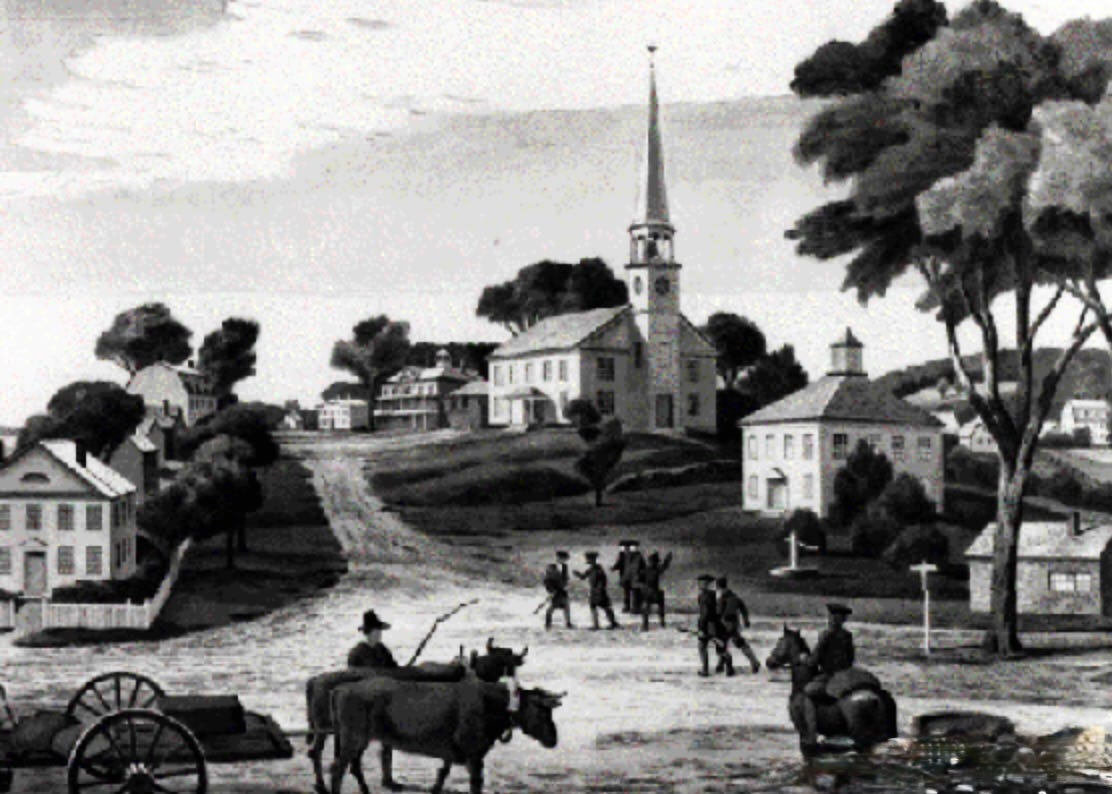
Jonathan Edwards won his reputation as a thinker. As a philosopher, his greatness was unmatched. Benjamin Franklin said that he “had a rational mind unmatched for generations untold.” Daniel Webster said that his books were among the “greatest achievements of the human intellect.” James Hollister said he was “the most gifted man of the eighteenth century, perhaps the most profound thinker in the world.” And Georges Lyon said he was “superior to Locke, Newton, Descartes, and a couple of Pascals combined.”
But unlike his friend George Whitefield, Jonathan Edwards was not a master of pulpit oratory. He read his densely theological sermons from painstakingly researched manuscripts. Only rarely did he deign to make eye contact with his congregation. Though not unpleasant in demeanor, he hardly cut a dashing, popular figure.
A member of his church described these deficiencies sympathetically, “His appearance in the pulpit was with a good grace, and his delivery easy, natural, but very solemn. He had not a strong voice but appeared with such gravity, and spake with such distinctness and precision—his words so full of ideas and set in such a plain and striking light—that few speakers have been so able to demand the attention of an audience as he.” But another said, “I can little explain how the assembly remains awake during his discourses—which are over-long, boorish, and often incomprehensible to the simple man. Though there is evidence of some great passion in thought, yet to the eye and ear, little or none.”
Nevertheless, on July 8, 1741, Edwards traveled a few miles from his home in Northampton, Massachusetts into western Connecticut and read to a small congregation assembled there “the most famous sermon ever delivered in the history of America.” Entitled Sinners in the Hands of An Angry God, the sermon was an exposition of the text, “Their foot shall slide in due time” (Deuteronomy 32:35). Its subject was the immanence of judgment and the horrors of perdition. It was about what we today derisively call “hell-fire and damnation.”
Later described by literary and historical critics as a “rhetorical masterpiece,” the sermon was astonishingly gripping and terrifyingly vivid, “Yea, God is a great deal more angry with great numbers that are now on the earth; yea doubtless, with many that are now in this congregation, who it may be are at ease, than He is with many of those who are now in the flames of Hell. The wrath of God burns against them, their damnation does not slumber; the pit is prepared, the fire is made ready; the furnace is now hot ready to receive them; the flames do now rage and glow; the glittering sword is now whet and held over them. Unconverted men walk over the pit of Hell on a rotten covering, and there are innumerable places in this covering so weak that they will not bear their own weight, and these places are not seen.”
The sermon caused an immediate sensation in the town of Enfield. According to historian John Currid, even before the sermon was finished, “people were moaning, groaning and crying out” such things as “What shall I do to be saved?” There was such a “breathing of distress and weeping” that Edwards had to quiet and calm the people several times so he could conclude. The fervor of the Great Awakening that had thus far by-passed Enfield, now swept through the little town with a white-hot intensity.
The sermon was soon printed and distributed throughout the American colonies. To this day it is not only a standard text for the study of great preaching, it has passed into the realm of classic literature—and thus is perhaps the most anthologized sermon in the English language.
Though obviously anointed with divine favor, Sinners in the Hands of an Angry God—like so much of the rest of his vast body of work—was not without controversy. Many said that Edwards illegitimately played upon people’s emotions. Others said that he shamelessly exploited the popular fears and phobias of the day.
For the record, Edwards claimed that all of his sermons, some even more vivid than the one he preached in Enfield, were modeled on the admonition of the Apostle Paul, “Knowing therefore the terror of the Lord, we persuade men” (2 Corinthians 5:11).
It was that kind of pastoral concern and evangelistic passion that enabled Edwards to wisely lend leadership and direction to the Great Awakening—perhaps the most sweeping revival in modern history. It enabled him to become the “acknowledged dean” of American Evangelicalism. And it thrust him into the international limelight alongside Whitefield.
Even so, the controversy stirred by his unbending commitment to an unadulterated substantiveness never entirely went away. After nearly a quarter century of service to his Northampton congregation, a disgruntled faction, who desired less stringent moral standards for church membership and access to the sacraments than Edwards would allow, secured his ouster. He was exiled to the frontier where he served as a missionary to the Native American Indians.
But he had no regrets. He knew that the substantiveness of the faith was not a matter to be trifled with. He knew that both the immanence and the finality of eternal judgment mitigated against lowering the standards, diluting the ethics, or compromising the integrity of his proclamations. He knew that Hell was the best argument against muddled and mitigated morals. Knowing this, Jonathan Edwards pled for his flock to hear and heed a message of substantive wisdom, “You hang by a slender thread, with the flames of divine wrath flashing about it, and ready every moment to singe it and burn it asunder. God hath had it on His heart to show angels and men, both how excellent His love is, and also how terrible His wrath is.”
He was unwilling—regardless of the cost—to dumb down his message, to make it more user friendly, to reduce it to the lowest common denominator. He was convinced that to do would be a betrayal of wisdom. As G.K. Chesterton later remarked, “If the world grows too worldly, it can be rebuked by the church; but if the church grows too worldly, it cannot be adequately rebuked for worldliness by the world.” So, Edwards stuck by his guns.
Cost him, it did. His struggle for substantiveness appeared to be a lost cause toward the end of his life. But his weighty refusal to compromise insured his reputation. Today, no one reads the critics of Jonathan Edwards; no one takes seriously their arguments; no one even considers their concerns. But Edwards remains the epitome of resistance and restoration.
Many in our day feel no need of love and favor of God, precisely because they have no knowledge of the wrath of God. They walk about as dead men, blissfully ignorant of their condition.