
Reading Chalmers

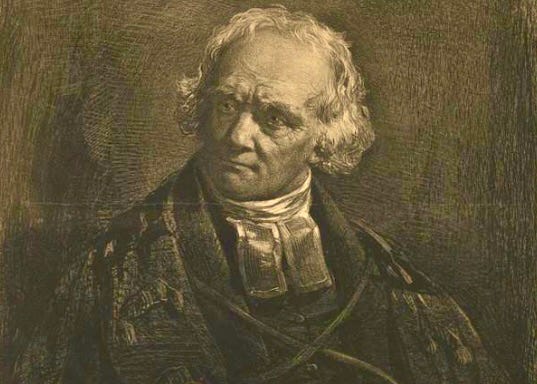
The church historian Iain Murray has asserted, “There is not, of course, any difficulty in explaining the indifference of the modern secular mind to Thomas Chalmers, neither is it surprising that churchmen of liberal persuasion should lack enthusiasm for his memory. What is more problematical is the question why Evangelical and Reformed Christianity should have made so little of him these many years.”
Over the course of the past thirty years I have pondered the same dilemma—for, the more I study Chalmers, the more I marvel at his eloquence, relevance, and prescience.
I am often asked how to begin a serious study of his life and work. This is at least partly because I can hardly ever give a lecture, preach a sermon, write an essay, or post a blog without mentioning him. But even more, it is because reading Chalmers can prove to be an arduous and elusive pursuit.
Don’t be fooled by the fact that at the beginning of the nineteenth century, Chalmers was heralded as the greatest preacher in the English-speaking world: he is very difficult to read. His vocabulary was vast, his Scots syntax is peculiar to those of us accustomed to the less circuitous English spoken south of the Tweed, and his pre-Victorian, Regency era rhetorical formalism is quite alien to modern readers and speakers of the King’s Tongue. Plowing through his dense style is more than a little difficult—but it is also very much worth the effort.
It is worth the effort, that is, if you can find his works to plow through. And that is no easy matter either. Virtually all of his books have long been out of print. Reprints are not only few and far between, they tend to be scanned from antiquarian library copies rather than newly, clearly typeset. You can find quite an array of titles in the Google Books and Guttenberg Project digital collections—but they lack the context that good introductory essays, explanatory footnotes and historical references, and deep indexing might provide.
The multi-volume Keystones discipleship and Bible study set is the easiest route to a good introduction to the life and work of Chalmers (Highland Press). In addition though, the set actually extends the ministry of Chalmers in a very practical fashion in your own life, family, and ministry. Start here.
The next book to which I always send readers is the short profile by John Roxborough and Stuart Piggen entitled, The St. Andrew Seven (Banner of Truth). Though not entirely about Chalmers (most of the text is devoted to six of his students and the way he influenced the trajectory of their lives and ministries) it is nevertheless the best single, accessible work available in a modern edition.
The doctoral thesis of John Roxborogh is likewise very helpful. Thomas Chalmers: Enthusiast For Mission (Rutherford House and Paternoster Press) is a concise examination of the parish vision and missional structure Chalmers helped to institutionalize in the Free Kirk.
In terms of biography, one of the most helpful short works currently in print is by Sandy Finlayson, the librarian at Westminster Theological Seminary. Chief Scottish Man: The Life and Ministry of Thomas Chalmers (Evangelical Press).
In addition, Iain Murray devotes a single chapter to Chalmers in A Scottish Christian Heritage (Banner of Truth). As he always seems to be able to do, Murray captures the heart and soul of both the Gospel message and the human, historical means by which that message is proclaimed in this poor fallen world.
Another helpful doctoral dissertation recently published, but alas now out of print, is Stephen Brown’s Thomas Chalmers and the Godly Commonwealth (Oxford). Serving as a critical biography, the work affords useful balance to the historical and theological reader.
Of the nearly one hundred works actually written by Chalmers, only the two volumes of his Sabbath Scripture Readings (Solid Ground) and his Letters (Banner of Truth) remain in print. The Readings are delightful Lectio Divina meditations on individual chapters of Scripture written for his personal devotions during the last few years of his life. They provide us with a remarkable glimpse into both his heart and his ministry, his piety and his hermeneutic. In addition, the quotations used in Keystones are taken from these Sabbath Readings. The Letters portray the great man at work, at home, on the stump, in the midst of controversy, in the classroom, and amongst his brethren in a way that only a collection of personal correspondence possibly could.
Of his sermons, only The Expulsive Power of a New Affection is widely available—including in a new edition with my brief introduction (Standfast Press). It is genius and certainly warrants the attentions of serious students of the Gospel. But a host of his other works are as valuable. A new, annotated edition of his most accessible works should be a high priority for an enterprising publisher—as would a new comprehensive biography and in-depth studies of his parish vision, missional strategies, and church planting endeavors.
I have long thought that something like what James Bratt has undertaken to rehabilitate the life and work of Abraham Kuyper, needs to be done for the life and work of Chalmers. But until someone is able to take up that substantial mantle, we will have to content ourselves with a handful of scattered resources (I am presently working on several projects, including a full biography, A Wider Diameter of Light, an anthology of his sermons and lectures, quotes and epigrams, The Expulsive Power, and an analysis of the parish system he recovered, Parish Life, in addition to several Old Testgament editions of his multi-volume Keystones discipleship and Bible memory system).
Chalmers once asserted, “No matter how large, your vision is too small.” My own vision for recovering the work of Chalmers from undue obscurity is large, but I am quite certain that in this too, he is right: it remains too small.
But of course, that is always the case with the ongoing work of Resistance and Reformation.