Halos
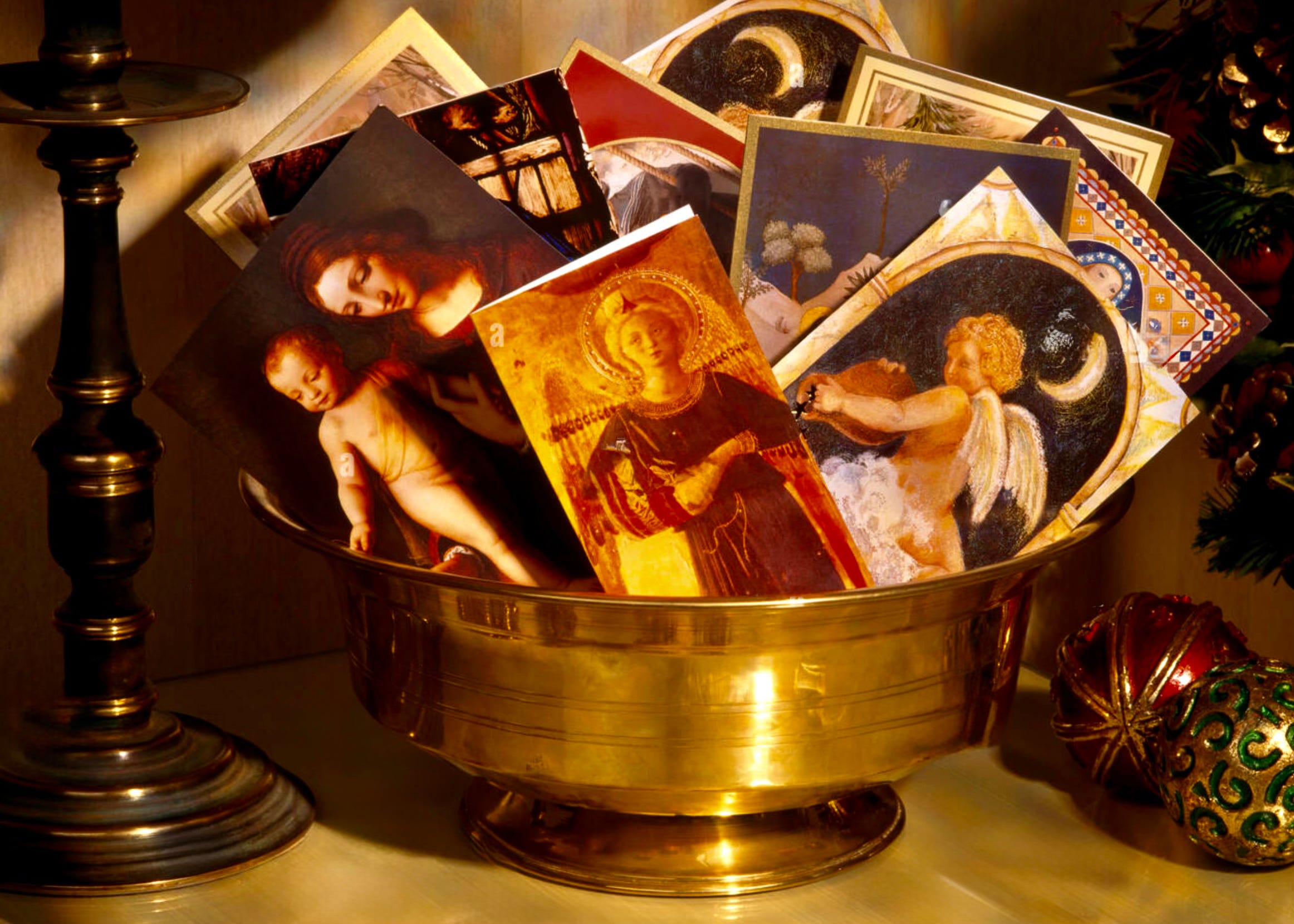
Sitting on a table in our home is a bowl filled with this year’s Christmas cards, holiday greetings, and year-end letters. Like the season they heralded, they’re festive affairs. Some are adorned with family photos, some with calligraphic benedictions. But many are illustrated with nativity scenes. The styles vary widely, from classic to modern, but in all of them there’s a recognizable artistic trope: halos. Realizing that got me to pondering.
Originally, the word halo was coined to describe a nimbus of radiant light. The term was used in both Classical and Koine Greek to portray the band of luminescence visible around the sun or moon caused by refractions in the atmosphere. In the Iliad, Homer employed the term to indicate the aura of glory around the heads of heroes in battle. The mythologies of the Sumerians, Babylonians, and Persians often depicted a glimmering aureole surrounding their idols and gods—sometimes even their kings. The Colossus of Rhodes, one of the Seven Wonders of the Ancient World, was a monumental statue of the Greek god Helios. Soaring over 100 feet above the island’s harbor, he was crowned with a sunburst of light—copied millennia later for the Statue of Liberty.
By the time Christianity began to spread across the Mediterranean world, halos had become universal symbols of glory and majesty—but the earliest believers resisted using them due to their associations with paganism. By the beginning of the fourth century however, with the ascendency of a Christian culture, the idea of depicting the luminous grace of God began to make its way into popular art—particularly for depictions of the incarnate Christ.
Despite its antiquity, halo did not pass into common English parlance until the sixteenth century. Samuel Johnson’s 1723 Dictionary only offers a scientific definition of the noun. But by 1828, the definition was expanded to include a theological meaning illustrated from Isaiah’s prophecy, “Arise, shine, for your light has come, and the glory of the Lord has risen upon you.”
This is of course a theme picked up in the New Testament: Jesus said, “I am the light of the world. Whoever follows me will not walk in darkness but will have the light of life.” And, the Apostle Paul declared, “For at one time you were darkness, but now you are light in the Lord. Walk as children of light.” Last month’s Christmas cards often limit halos to Jesus, Mary, and Joseph. But in truth, all of us who have by grace entered the light from the darkness are haloed in glory.


